
In brief
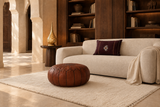
To add orange to a rental home without painting, begin with a movable accent: a cushion cover, a throw, or a leather pouf. Place it beside furniture you already own, assess it in daylight and evening light, and add a second touch only if the room needs it. The aim is a more personal space, not a larger shopping list.
A rental can be comfortable and still feel unfinished. The walls may be neutral, the furniture familiar, and the room perfectly functional. What is missing is not necessarily a renovation. It may be one object that changes where the eye settles.
Orange can provide that point of character without becoming a permanent surface. This guide focuses on changes you can move, rearrange, and take with you: no painting, no drilling, and no replacement of the main furniture.
For the broader meaning of the colour, read What Does Orange Symbolize in Interior Design? Here, the question is practical: what should you change first, and when should you stop?
Start with What You Already Own
Before buying anything, look for warm colour already present in the room. A book cover, a ceramic bowl, a print resting on a shelf, or a textile stored away may offer a useful starting point.
Bring one of these objects into the part of the room you use most. Move it between two or three positions rather than gathering every warm-coloured object in one corner. You are testing placement, not trying to create a matching collection.
If nothing you own introduces orange, that is useful information too. It means the first purchase can be deliberate, rather than one of several uncertain experiments.
Choose One Place to Begin
Pick a place connected to an everyday habit: the chair where you read, the sofa where you spend the evening, or the foot of the bed. A colour accent has more purpose when it belongs to how the room is used.
Leave the rest of the room alone at first. Introducing orange simultaneously on the sofa, bed, shelves, and floor makes it harder to judge which change is actually working.
One clearly placed object creates a useful test. Several scattered purchases create a new problem to arrange.
A Cushion Cover: Change the Surface, Not the Sofa
If you already have a suitable cushion insert, changing its cover can introduce orange without replacing the cushion or the sofa. Check the cover and insert dimensions before ordering; a cover without an insert is not a complete cushion.
Start with one orange cover beside an existing neutral cushion. Give it enough space for its texture or pattern to remain visible. There is no need to replace the entire arrangement.
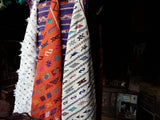
Consider texture as well as colour. A woven surface and smooth leather reflect light differently, so choose the material for the way you use the seat, not simply for its shade. Follow the particular cover’s care instructions rather than assuming every textile is washable.
A Throw: One Textile, Several Possible Positions
A throw or blanket allows you to test a larger area of colour while keeping the change reversible. Fold it over the back of a chair, place it across one end of the sofa, or lay it at the foot of the bed.
Try these positions with the same textile before buying another. A narrow fold shows less colour; an open drape makes the textile a more prominent part of the room. Placement changes the effect without changing the object.
Choose dimensions and material for its intended use. A decorative layer on a bed and a blanket you reach for on the sofa may call for different sizes, weight, and care requirements.
A Leather Pouf: Add Colour and a Useful Volume
A pouf offers a more substantial intervention than a cushion cover. Its colour occupies floor space and its volume changes the seating arrangement, so measure where it will go before choosing it.
Place it close enough to a chair to be useful as a footrest, or within a seating group where it can serve as an occasional seat when appropriately filled. Keep walking routes clear, and check whether doors or drawers need that space.
The orange Zigzag leather pouf illustrates this approach: a distinct orange accent carried by a stitched leather construction rather than by painted furniture. Its worked surface provides detail without requiring additional decoration around it.

This model is supplied unfilled. Include the filling materials and the dimensions of your selected size in your decision. Consult the Moroccan leather poufs guide before treating the purchase price as the complete cost of a ready-to-use seat.
A pouf need not be the first or least expensive step. Choose it when its function solves a real need as well as introducing colour.
Make the Accent Feel Settled, Not Scattered
Once the first object is in place, look at the room from the doorway and from your usual seat. Does the orange belong to a clear area, or does it seem isolated?
If the room needs a connection, try moving an existing warm-toned object nearer to it. A second orange purchase is only one option. Wood, a book, or a related shade in an existing textile may already provide enough continuity.
Do not force an exact match between leather and woven fabric. Their surfaces respond differently to light. A considered relationship is more useful than identical colour labels.
Check the Room in Two Kinds of Light
Look at the arrangement in daylight and with the lamps you normally use in the evening. The accent may appear brighter in one setting and deeper in another.
Keep the lamps and furniture in their usual positions while judging the result. You are choosing something for your actual home, not constructing a temporary photograph.
If the colour feels too dominant, show less of the textile or move the object slightly away from the room’s main sightline. Adjust its exposure before assuming you need a different shade.
Set a Spending Limit Before Building a Palette
Decide what you are comfortable spending on the first change, rather than pricing a complete room transformation. Compare the full cost of using each option: an insert for a cushion cover, filling for an unfilled pouf, and any relevant delivery costs.
There is no need to buy a cushion, a throw, and a pouf together. Start with the item that answers your most immediate need. If you want a softer seat, begin with a suitable cushion. If you regularly reach for a blanket, choose a textile you will use. If the room needs a footrest, consider a pouf.
This is a measured approach to spending, not a claim that every handmade object is inexpensive. Fewer well-chosen pieces can be more useful than several accents purchased only to complete a colour scheme.
Choose Objects You Can Take to the Next Home
Before committing, ask whether the piece could work in a different arrangement. A cushion cover may move from sofa to chair. A blanket may move from bedroom to living room. A pouf may find another place in a seating group, provided its size remains practical.
Choose portability and flexibility over an arrangement that depends on the exact dimensions of one rental. Keep care guidance with the object, and plan how it will be packed when you move.
The room can change. The object should still have a purpose.
Know When the Room Has Enough Orange
After living with the first change, decide whether the space actually needs more. Does it feel more personal? Is the object useful? Does your eye move comfortably through the room?
If the answer is yes, you may already be finished. A successful accent does not need to become a theme.
Start small. Place with care. Stop when the room feels like yours.
Frequently Asked Questions
How can I add orange to a rental home without painting?
Use movable accents such as cushion covers, throws, or a leather pouf. Begin in one area, test the arrangement in daylight and evening light, and add another touch only if the room needs it.
What should I try before buying orange decor?
Look for an existing textile, book, print, or ceramic object with a warm tone, and test it in different positions. Rearranging what you own can help you identify where a new accent would be useful.
Can I introduce orange without replacing my sofa?
Yes. A compatible cushion cover or a throw can change part of the sofa’s visible surface while leaving the furniture itself unchanged. Check sizes, insert requirements, and care instructions before choosing.
What extra costs should I consider?
Check whether a cushion cover needs an insert or a pouf needs filling, and include relevant delivery costs. Compare the complete cost of making the object ready for its intended use.
How do I choose a pouf for a small rental?
Measure the intended position and check the dimensions of the selected size. Keep walking routes, doors, and drawers clear, and choose a pouf for a useful function rather than colour alone.
Do I need several orange accessories for the room to look coherent?
No. One well-placed orange accent can be enough. Try connecting it with existing warm materials or related tones before buying additional matching accessories.
One Thoughtful Accent
Explore orange home accessories by texture, size, and everyday purpose. Begin with the piece your room needs, not an entire new palette.
Explore Orange Home Accessories