
In brief
Moroccan design can give a boutique hotel a distinctive identity through tactile materials, considered lighting and objects with documented provenance. The strongest approach is selective: place artisan pieces where guests can notice and use them, then assess each choice against circulation, comfort, cleaning and maintenance. A beautiful object is a starting point, not a complete hospitality specification.
A handwoven rug beside a bed. A leather pouf in a quiet lounge. A metal tray used for the first welcome.
These pieces do not need to turn a hotel into a recreation of a Moroccan riad. They can bring material depth to contemporary architecture, soften restrained rooms and create moments of recognition within a larger design language.
The question is not simply which Moroccan objects to buy. It is where their character belongs, what guests will ask of them and how the hotel will care for them after opening day.
Build an Identity, Not a Theme
Begin with the property rather than the product.
A coastal retreat, an urban townhouse and a courtyard hotel need different relationships between light, texture and ornament. Moroccan craft can contribute to each, but the same combination of rugs, lanterns and decorative objects will not serve every setting equally well.
Choose a small material vocabulary first. Wool and leather might establish a warm, tactile interior. Ceramic and metal can introduce contrast. Embroidered textiles can provide a controlled layer of pattern.
Then decide where the expressive pieces belong. A reception lounge may accommodate a more graphic rug or a sculptural object. A bedroom may need a quieter palette and fewer competing textures. A corridor may benefit from visual restraint, with character concentrated at a seating niche or another point where guests pause.
Consistency does not require identical objects. It requires a clear relationship between them. The aim is an interior with a recognisable point of view, not a room in which every surface announces its inspiration.
For the broader relationship between architecture, materials and craft, explore Moroccan Interior Design. For composition, colour and layering, see our guide to Moroccan decorative style.
Design Around the Guest Journey
An artisan object becomes meaningful through its position and use. Think about what a guest sees on arrival, touches in the room and encounters during shared moments.
Reception: Establish the First Impression
The arrival space introduces the hotel’s material language. One well-positioned piece can do more than a collection of small accents: a rug that defines a seating area, a vessel placed away from luggage traffic, or a textile that gives a restrained lounge its colour.
Keep movement legible. Guests should be able to identify the reception desk, place their bags and move through the space without negotiating decorative arrangements. Objects belong alongside the welcome, not in its way.
Shared Lounges: Make Character Comfortable
Lounges allow guests to spend time with materials rather than merely pass them.
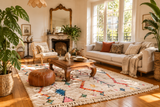
A leather pouf can serve as a footrest or an occasional seat, depending on its construction, dimensions and filling. Cushions can introduce a regional textile tradition without requiring a complete change of furniture. A rug can define a smaller gathering area within a larger room.
Assess the arrangement as seating, not only as a photograph. Consider support, reach, table height and the ease of moving between chairs. A pouf should not be treated as a substitute for supportive primary seating simply because it looks well beside a sofa.
Guest Rooms: Let Texture Carry the Design
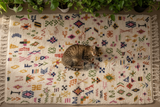
Bedrooms often need less visual information than public spaces. A handwoven rug, a considered cushion or a folded blanket can introduce Moroccan craft without competing with the room’s purpose.
Placement matters as much as selection: textiles should work with the bed, luggage area, doors and housekeeping routine. Avoid adding layers that staff must remove and rebuild solely to preserve a styled image. The room should remain convincing when someone is living in it.
Breakfast and Dining Spaces: Separate Display from Service
Ceramics, trays and metal objects can contribute to a dining room’s identity. Their intended use must remain clear.
A decorative bowl is not automatically suitable for serving food. A handcrafted tray is not necessarily designed for repeated washing or hot dishes. Confirm food-contact suitability, cleaning instructions and relevant requirements before specifying pieces for service.
Where suitability has not been established, use the object decoratively rather than treating appearance as evidence of function.
Select Materials for Their Actual Use
Handmade character and practical suitability are separate questions. Both deserve attention.
Rugs and Textiles
A rug intended for a quiet suite faces different demands from one placed in a reception route.
Consider its construction, pile, dimensions, edge profile and cleaning requirements. Check how it interacts with doors, furniture and wheeled luggage. Assess any backing or underlay as part of the installation rather than as an afterthought.
For cushions and blankets, confirm fibre composition and care instructions for the specific product. Trade names alone are not a complete material specification. Decorative textiles should also be distinguished from bedding or other items that enter a frequent commercial laundry cycle.
Our complete guide to Moroccan rugs explains the weaving traditions and constructions behind the objects; the hotel brief must establish their suitability for each proposed location.
Leather Poufs and Ottomans
The filling is part of a pouf’s performance. Ask how the piece will be supplied, who will fill it and how the final firmness will be assessed. Review the closure, finished height, stability and access for future maintenance.
Leather colour and finish should be evaluated through an approved sample where possible. A photograph can help establish direction, but it cannot fully communicate surface character or the range of variation in a handmade order.
Lighting
Moroccan metalwork can introduce an expressive layer of light and shadow. That effect should complement, rather than replace, the lighting required for reading, working and moving safely.
Treat the decorative fitting and the electrical installation as related but distinct specifications. Confirm the fitting’s suitability, components and compliance for the project’s location with the appropriate supplier and qualified installer. Outdoor and damp-area applications require their own assessment.
Ceramics and Accent Objects
Ceramic vessels and smaller objects can offer material contrast without adding another textile layer. Place them according to stability, reach and exposure to movement. A piece on a reception console faces different risks from one in a protected display niche.
For objects intended to hold water, food or hot items, verify that function explicitly. Do not infer it from the object’s shape.
For general material and selection criteria, see How to Choose a Moroccan Home Accessory. Commercial-use requirements still need to be assessed separately.
Balance Unique Pieces with Repeatable Elements
Boutique hotels can benefit from variation. Not every room needs the same rug or the same embroidered cushion. But variation should be planned.
Distinguish between pieces selected individually and elements that need to be coordinated across the property. A one-of-a-kind rug may belong in a signature suite or a lounge. A recurring cushion format may help connect several rooms through a shared palette.
For coordinated orders, agree on what must remain consistent and where handwork may vary. Dimensions, colour range, pattern placement and finish should be discussed before production, not discovered during installation.
An approved sample provides a reference. It should be accompanied by an understanding of acceptable variation, rather than an assumption that every handmade piece will be identical.
Replacement also deserves consideration. If an object cannot be reproduced, the design should allow for a future piece with a related character rather than depend on an exact match.
Moroccan Corridor Insight
Use singular pieces as focal points and coordinated pieces as the supporting layer. This gives handwork room to remain distinctive without leaving the property’s visual coherence to chance.
Make Provenance Useful to the Guest
An object does not need a long story attached to it. It needs an accurate one.
A short note might identify the region, material and technique, together with the maker or workshop when that information is documented. A discreet room guide or digital resource can offer a deeper reading to guests who want it.
Separate what is known from what is interpreted. The visible irregularity of a weave may be described as evidence of handwork. A pattern may be discussed within a documented cultural context. Neither justifies inventing the artisan’s intention or assigning a fixed meaning to every motif.
The most persuasive account is often the simplest: where the object comes from, how it was made and why it was chosen for this space. The object should remain part of the room, not become a museum label with furniture around it.
Introduce Ritual Without Staging an Entire Culture
A welcome tray or a considered tea service can connect objects with an act of hospitality. What matters is the gesture and the quality of its execution. The arrangement should be practical for staff, appropriate to the setting and comfortable for guests.
There is no need to turn every shared moment into a performance of “Moroccan authenticity.” A property can acknowledge the traditions informing its choices while developing its own way of receiving people.
For the cultural background, continue with Moroccan Mint Tea: History, Ritual, Recipe, and the Art of the Tea Service and The Moroccan Table: A Thousand Years of Ritual. This guide’s concern is how those references become thoughtful decisions within a working hotel.
Prepare a Project Brief Before Ordering
A clear brief protects both the design and the production process.
Record the intended location and use of each piece, together with quantities, dimensions, material requirements and the installation deadline. Identify which items require samples, which may vary and which must be coordinated.
Discuss cleaning and maintenance before final approval. Include questions about spare covers, replacement pieces, filling, packaging and access for delivery where relevant.
The hotel team should also identify applicable fire, electrical, accessibility and food-contact requirements with its qualified advisers. Handmade provenance is not a substitute for project-specific compliance.
Build time into the schedule for sample review and decisions. Production and delivery commitments should be confirmed for the actual order rather than inferred from standard retail estimates.
The best brief connects three perspectives: what the designer wants the guest to experience, what the artisan or supplier can deliver, and what the hotel can maintain.
Give Craft a Place in Everyday Hospitality
Moroccan artisan pieces are most convincing when they belong to the life of the property.
A rug that defines a place to pause. A pouf used at the end of a long day. A tray brought out for a genuine welcome. A textile whose texture remains memorable after the room’s details have faded.
Their value is not that they make every space look Moroccan. It is that they bring a particular material and human presence to the spaces where they have been carefully chosen.
Start with the guest experience. Select the object for its role. Verify the practical requirements. Then allow the craft to speak without asking it to explain the whole room.
Frequently Asked Questions
How can a boutique hotel introduce Moroccan design without creating a themed interior?
Begin with a restrained palette and a small number of artisan pieces. Use texture, material and proportion to connect them with the existing architecture. A few well-placed objects can establish character without filling every room with decorative references.
Are handmade Moroccan pieces suitable for commercial hotel use?
Suitability depends on the individual product, its placement and the demands of the space. Confirm construction, maintenance instructions and relevant project requirements. Handmade origin alone does not establish durability or compliance.
Should every guest room contain identical artisan pieces?
Not necessarily. A shared palette, scale and material vocabulary can connect rooms while allowing selected objects to vary. Decide in advance which elements must be coordinated and which can remain unique.
What should a hotel confirm before ordering leather poufs?
Confirm dimensions, intended use, leather finish, filling method, final firmness and maintenance access. For coordinated quantities, review a sample and agree on the acceptable range of handmade variation.
How can a hotel share the story behind an artisan object?
Use concise, documented information about its origin, material and technique. Name the maker when verified, and distinguish cultural context from interpretation. Avoid invented personal stories or fixed symbolic meanings.
Planning a Hospitality Project?
For coordinated quantities or custom requirements, share your intended spaces, product selection, quantities and timeline. Moroccan Corridor’s wholesale team can discuss specifications and the feasibility of the proposed order.