
Five Moroccan home pieces where material, craftsmanship and everyday use matter more than trends — from handwoven rugs and leather poufs to textured cushions, lighting and wool blankets.
Buy fewer things, buy them properly, and let them earn their place over time. Some objects reveal their value not by being rare or fashionable, but by the materials chosen, the way they are made, and how they hold up to regular use.
Here are five categories where construction and craft can make a lasting difference. This is not a seasonal must-have list; it is a guide to objects worth choosing with care and living with for years.
1. The Rug You Don't Replace
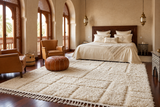
A rug does more structural work in a room than almost anything else. It sets the scale of a seating area, softens hard flooring, and gives everything placed on it a reason to belong together. Choose it well, and it can remain part of a home through many changes around it.
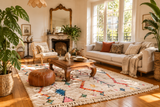
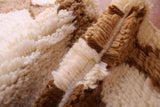
What separates a rug that lasts from one that doesn't is rarely visible in a photograph. It's in the knot, the wool, the density of the weave. A hand-knotted Moroccan rug — Beni Ourain, Azilal, Boujad, whichever region it comes from — is built from a tradition where the weaver's hand is the quality control, not a machine setting. That's also why no two are identical, and why a rug bought this way can become more interesting with age.
If you're choosing your first, our guide to authentic Moroccan rugs walks through what to look for beyond colour and size.
2. The Pouf That Never Sits Still
A pouf earns its place through use. It is handled, moved, sat on and leaned against, so leather quality and construction matter more than novelty.
Well-made full-grain leather can develop a softer surface and richer patina with use, rather than simply losing its character as it ages. Look at the hide, stitching and finish as well as shape. For materials, construction and care, see our Complete Guide to Moroccan Leather Poufs, and browse the leather poufs and ottomans collection.
3. The Cushions That Add Texture
Cushions are easy to replace, which is exactly why the good ones are worth choosing carefully. A hand-embroidered cover or woven Sabra textile carries a depth of texture that printed fabric rarely reproduces. The value is not simply visual: it lies in the irregularity of the weave, the handwork and how the material responds to use.
Explore the pillows and cushion covers collection.
4. The Light That Isn't on the Ceiling
Lighting is one of the few home objects where material and workmanship remain visible each time it is switched on. In pierced metal lanterns, the cut pattern, joinery and finish are part of the object, not an applied decoration.
A well-made lantern should feel balanced and sturdy, with clean perforations and a finish suited to its material. Explore the Moroccan lighting collection to see this metalwork tradition across different forms.
5. The Blanket That Gets Better With Washing
A well-made wool blanket can become softer and more characterful with regular use and appropriate care. Its weight, weave and fibre quality are what make it useful over time, whether it rests on a sofa or is brought out on a cool evening.
Look for a construction, fibre and weight suited to how you plan to use it. Our Moroccan blankets and throws collection brings together woven pieces made for the sofa and the bed, not simply the display shelf.
Buy Once
None of these pieces need to be bought together, and none of them need to be expensive to be worth it. What they share is simple: they were made by someone who understood the material, and they were built to be used, not just looked at.
A well-made rug, a pouf that earns its keep, thoughtfully made cushions, considered lighting, and a well-made wool blanket — five categories, one idea: buy for material, craftsmanship and use rather than for the season.
Curated for Timeless Living
Buy fewer things. Choose them well.
Explore Moroccan home pieces selected for material, craftsmanship and everyday use — from rugs and poufs to cushions, lighting and blankets.
Explore Moroccan Home Decor