
Start with one rug as the room's visual anchor, then build around its colours, texture, and scale. Layer natural materials, combine pattern with restraint, and leave enough quiet space for the rug to read as an intentional object rather than visual clutter.
Bohemian interiors are often described as abundant, layered, and personal. But the best rooms do not achieve that feeling by adding everything at once. They build atmosphere through the relationship between a few strong objects: a rug with presence, a worn leather pouf, a linen sofa, a basket, a cushion, a lamp, and the traces of a life taking place around them.
A bohemian room should feel collected, not crowded. The Moroccan rug is often the piece that gives the room permission to mix colour, pattern, and texture — but it needs one or two quiet surfaces around it to keep the composition legible.
For a broader guide to Moroccan rug traditions, rooms, and sizing, see our Moroccan Rugs guide. For a deeper look at origins, materials, construction, and authenticity, read The Complete Guide to Moroccan Rugs.
Start with the Rug, Not the Theme
A bohemian interior does not need to look like a catalogue of recognisable motifs. Begin with the rug you actually want to live with, then let the room develop from its character.
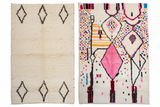
A vivid Azilal or Boucherouite can become the room's colour source. A Boujad can introduce warmth and faded depth without making the space feel overly formal. A flat-woven kilim can provide sharper geometry and a lower, more practical surface. A neutral Beni Ourain can give a layered room a calm foundation when the furniture and textiles carry more variation.
The question is not whether every object is visibly Moroccan. The question is whether the objects share a material or visual relationship: warmth, irregularity, natural fibre, softened colour, or a clear sense of use.
Build the Palette from the Rug
Choose two or three colours from the rug and repeat them quietly around the room. A rust or terracotta motif can reappear in a cushion or ceramic vessel. A deep brown can connect the rug to leather, walnut, or dark wood. A faded blue or green can sit alongside linen, plaster, or painted furniture without needing to dominate.
With a highly coloured rug, keep the largest surrounding surfaces calm: an undyed sofa, warm white walls, natural wood, or a plain cotton throw. With a neutral rug, the room can carry more colour in the cushions, artwork, curtains, or smaller objects.
Bohemian does not mean every colour has equal volume. Give one colour the lead, one or two colours a supporting role, and let the rest recede.
Layer Textures, Not Just Patterns
The richest bohemian rooms are tactile before they are colourful. Pair the rug with materials that create contrast under the hand and under the eye:
- Wool with washed linen
- Flat-weave kilim with a deeper pile rug
- Leather with cotton or woven textile
- Rough ceramics with polished metal
- Rattan or wood with plaster and painted surfaces
- Velvet used sparingly against matte natural fibres
Texture gives the room depth even when the palette remains restrained. It also prevents a colourful rug from having to carry the entire composition on its own.
Choose the Right Moroccan Rug Character
Azilal for colour and movement
An Azilal can work as the main statement in a neutral living room, bedroom, or reading corner. Its expressive composition is strongest when the furniture around it is relatively quiet. Let the rug provide the movement, then repeat one small colour elsewhere rather than matching every motif.
Explore our Azilal rug guide for more context on the tradition and its visual language.
Boucherouite for texture and personality
Boucherouite rugs can bring a more informal, collected feeling to a bohemian interior. Their surfaces and fibre content vary from piece to piece, so treat the individual rug as the authority. If the rug is already lively, pair it with plain upholstery and a limited number of patterned cushions.
Boujad for warmth and faded colour
Boujad rugs are often useful when you want colour without a highly graphic result. Their softened reds, pinks, oranges, and earth tones can sit comfortably with vintage wood, leather, plaster, and woven baskets.
Kilim for structure and layering
A flat-woven kilim brings a firmer surface and clearer geometry. It can anchor a dining area, hallway, or seating group, and it can also serve as a layering base beneath a smaller pile rug. When layering, use a rug pad and make sure the combination remains stable underfoot.
Use Layering with Intention
Layering works best when the rugs have different roles. A larger, quieter base can define the furniture area while a smaller vintage or colourful rug creates a focal point above it. The two rugs should share at least one relationship — colour, texture, scale, or tone — without looking identical.
Avoid placing several equally dominant patterns on top of one another. If the upper rug is colourful and irregular, choose a calmer base. If the base has strong geometry, let the upper piece be smaller and more restrained.
For more guidance on surface, comfort, and maintenance, read our guide to pile height in Moroccan rugs.
Give the Furniture Room to Breathe
A bohemian room can contain many objects without feeling heavy if the main furniture group has a clear footprint. In a living room, place at least the front legs of the sofa and principal chairs on the rug when the proportions allow it. In a bedroom, choose a rug large enough to meet the feet at the side or foot of the bed, or use a runner with a clearly intentional position.
Do not fill every visible surface. A margin of floor around the rug, a clear passage between furniture, and one empty section of wall can make the collected objects feel more valuable.
Bring in Cushions, Throws, and Poufs Carefully
Use cushions and throws to extend the rug's atmosphere, not to repeat every motif. If the rug is graphic, choose plain or softly textured cushions. If the rug is quiet, one patterned cushion or a striped throw can add the necessary movement.
A leather pouf can work as a footrest, occasional seat, or low table, but it should have enough space around it to remain useful. Place it near the seating group rather than scattering several small objects across the room without a clear function.
How to Avoid a Themed Interior
The easiest way to avoid a themed look is to mix Moroccan pieces with objects that do not make the same cultural reference: a contemporary lamp, a modernist chair, a simple oak table, an old painting, or a plain linen sofa.
Keep the room connected through materials and proportions rather than through a repeated visual label. One Moroccan rug, one leather or woven accent, and a few natural materials are often enough to establish the atmosphere.
Bohemian Moroccan Rugs by Room
Living room
Use the rug to define the seating group. A colourful Azilal or Boucherouite can lead a neutral room, while a Boujad or kilim can create a warmer, more layered foundation. Keep the coffee table and main upholstery simple enough for the rug to remain legible.
Bedroom
Choose softness and comfort first. A deeper pile can bring warmth beside the bed, while a smaller vintage piece at the foot of the bed can act as a concentrated colour moment. Keep the bedding quieter when the rug carries strong pattern.
Dining room
A flat-woven kilim is often practical beneath a dining table because chairs can move more easily across its lower profile. Measure with the chairs pulled out and allow enough rug beyond the table for every chair to remain supported.
Entryway or hallway
A narrow kilim, hanbel, or smaller vintage rug can bring colour and texture to a passage. Check door swings, walking width, thresholds, and rug stability before choosing a deeper pile.
Frequently Asked Questions
What type of Moroccan rug works best in a bohemian interior?
It depends on the role you want the rug to play. Azilal and Boucherouite rugs bring colour and movement, Boujad rugs bring softened warmth, and kilims bring clearer geometry and a lower profile. A neutral Beni Ourain can also work when the room's cushions, textiles, and objects provide more colour.
Can I layer two Moroccan rugs in a bohemian room?
Yes. Choose rugs with different roles and make sure they share at least one relationship in colour, texture, tone, or scale. Use a rug pad and avoid layering several equally dominant patterns.
How do I keep a bohemian interior from looking cluttered?
Let one rug or textile lead the composition, keep the largest surrounding surfaces relatively quiet, and leave clear space around the main furniture group. Bohemian style works through considered layering, not through filling every surface.
Can a Moroccan rug work with modern furniture?
Yes. A Moroccan rug can soften clean-lined furniture and add material depth to a contemporary room. Keep the furniture silhouettes simple and let the rug provide the irregularity, colour, or texture.
How should I choose a Moroccan rug for a small room?
Measure the furniture footprint first and mark the intended rug dimensions with painter's tape. A smaller rug can work well when it has a defined role, such as anchoring a reading corner, sitting beneath a small table, or creating a deliberate accent.
Explore the full Moroccan rug collection, or use our Moroccan Rugs guide to compare traditions, rooms, sizes, and interior styles.