
In brief
Choose orange paint when you want colour to shape the room’s background. Choose orange furniture when a useful, substantial object should become the focal point. Choose accessories when you want a smaller or more adjustable intervention. Compare the visible area, everyday function, total cost, and effort of changing your mind, rather than assuming one option is always better.
There is a difference between wanting an orange room and wanting orange in a room. A painted wall changes the setting. A chair changes the composition. A textile changes one surface within it.
All three can work. The useful question is not which is most fashionable, but which kind of change your room actually needs.
This guide compares the decisions. For colour associations and palette ideas, see What Does Orange Symbolize in Interior Design? If painting is already ruled out, go directly to How to Add Orange to a Rental Home Without Painting.
Orange Paint, Furniture, and Accessories: What Changes?
These are not simply three price points. They are three ways of distributing colour. Paint follows the architecture; furniture introduces a volume; accessories allow more local adjustments. A large textile can show more orange than a small chair, so the category alone does not tell you how strong the result will be.
On narrow screens, scroll the table horizontally to compare all three options.
| Decision | Paint | Furniture | Accessories |
|---|---|---|---|
| Best suited to | A background you want to live with across a defined wall or area. | A focal object that also answers a seating, storage, or other functional need. | A more local change in colour, texture, or softness. |
| What stays fixed | Colour remains attached to the chosen surface. | The colour belongs to the object, even if you reposition it. | Some visible area can be adjusted by folding, moving, or exchanging a cover. |
| Changing your mind | Usually means preparation and repainting. | May mean moving, storing, re-covering, or replacing the piece. | Often easier to rearrange, but size and storage still matter. |
| Costs to include | Samples, preparation, paint, tools, labour if needed, and possible repainting. | The piece, delivery, assembly if relevant, and care or future re-covering. | The object, inserts or filling if required, delivery, and appropriate care. |

Choose Orange Paint When You Want a Background
Paint is worth considering when the room’s surfaces, rather than its furnishings, are what you want to change. An orange wall can become the background for a quiet arrangement of furniture. It need not be repeated in every cushion or decorative object.
Look at the wall as a whole: its visible area, openings, corners, and relationship to the next room. A narrow recess and a long uninterrupted wall will not produce the same effect, even in the same shade.
Paint also leaves the floor clear. If the room has enough furniture and little spare space, changing a surface may make more sense than buying another object.
Choose it because you want to live with that background, not because a small colour sample looked appealing on its own. Follow the paint manufacturer’s preparation and application guidance for the actual surface.
Choose Orange Furniture When the Room Needs an Object
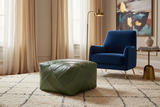
An orange chair or sofa introduces colour through a three-dimensional form. You see it from different angles, and its shape, upholstery, and position matter as much as its shade.
Begin with the functional question. Does the room need a chair? Is the existing sofa due for replacement? Will the proposed piece fit both the seating arrangement and the access route into the room?
If the answer is no, colour alone is a weak reason to replace useful furniture. If the answer is yes, orange can become part of a purchase you would have made anyway.
Ask whether you would still choose the piece in a neutral colour. That question separates a well-chosen object from a colour impulse. Comfort, scale, construction, and care remain important after the first visual impact has become familiar.
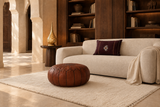
A pouf sits between the categories: often sold as an accessory, it behaves like a small furnishing because it occupies floor space and may serve as a footrest or occasional seat when suitably constructed and filled. Judge it by its dimensions and intended use, not by the label “accessory.”
Choose Orange Accessories When a Smaller Change Is Enough
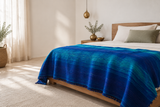
Accessories make sense when the main furniture already works and the room needs a more limited intervention. A cover changes part of a seat’s visible surface. A throw introduces a layer that can be folded away. Neither requires the whole room to adopt a new identity.
This flexibility does not make accessories automatically inexpensive or inconsequential. A generously sized blanket can occupy a large part of the view. Several small purchases can cost more than a single deliberate change.
Material is part of the decision. Woven fabric disperses colour through its texture; leather offers a different surface, with grain and construction contributing to its presence. These are reasons to consider orange home accessories as objects, not interchangeable swatches.
Choose the format for the effect you need. A cushion cover is a local accent; a throw can show more or less colour; a pouf adds a volume. If your starting condition is a home you cannot repaint, our rental decorating guide develops the placement and reuse of these objects in greater detail.
Test the Option You Are Actually Considering
For Paint: Test Colour and Finish Together
Use the intended paint product and finish where possible, rather than judging from a screen or printed colour card alone. Follow the sample instructions, allow it to dry, and view it with the furniture and flooring that will remain.
A movable sample board can help you compare positions without repeatedly marking the wall, but it cannot perfectly reproduce every wall surface. Check the manufacturer’s guidance and assess the result on the relevant substrate before committing.
Observe the sample in daylight and under your usual evening lamps. Compare a restrained selection of shades rather than surrounding one patch with many competing colours. A sample helps assess colour; it does not fully reproduce the effect of a whole wall.
For Furniture: Test Scale Before Shade
Mark the footprint with a suitable removable method and check walking routes. Measure the height and depth as well as the width. An upholstery sample can help you judge the colour beside existing materials, but it will not recreate the size or comfort of the finished piece.
For Accessories: Test the Visible Area
Use an existing textile of a comparable size to understand the area you intend to cover. Fold it as you would fold the new throw, or position a similarly sized cushion. This tests proportion, not an exact colour match.
The purpose of testing is to answer a specific uncertainty. Do not treat a small orange accessory as proof that you will enjoy an entire orange wall.
Compare the Complete Cost, Including Reversal
There is no universal price ranking between paint, furniture, and accessories. A small paint project, a professionally finished room, and several handmade textiles represent very different costs.
Compare actual totals for the options you are considering. Include preparation and labour for paint, delivery and access requirements for furniture, and inserts or filling for products supplied without them. Read the particular care instructions rather than assuming every cover is washable or every leather surface needs the same treatment.
Then consider the effort of changing your mind. Repainting takes time. A large chair needs somewhere else to go. Even a movable accent requires a practical alternative position or storage space.
Reversible is not the same as cost-free. The useful choice is one you can live with, maintain, and adapt.
A Simple Way to Make the Decision
- Name the missing element. Is it a background, a useful piece of furniture, or a smaller accent?
- Decide how much orange you want to see. Compare actual visible areas, not only product categories.
- Test the main uncertainty. For paint, investigate shade and finish; for furniture, scale and comfort; for accessories, coverage and use.
- Compare the full cost and the route back. Include what it takes to make the change usable, and what happens if you later undo it.
If you want the architecture to carry the colour, consider paint. If you need a substantial focal object, consider furniture. If the room already functions well and needs a more adjustable layer, consider accessories.
You can combine them, but decide which will carry the main visual weight. An orange wall does not require an orange sofa, and an orange chair does not require a matching group of textiles.
Choose where the colour belongs. Then choose the thing that carries it.
Frequently Asked Questions
Should I choose orange paint or orange furniture?
Choose paint when you want orange to form the room’s background. Choose furniture when the room needs a useful focal object. Compare the visible area, function, dimensions, and effort of changing the choice later.
Are orange accessories always the least expensive option?
No. The cost depends on the objects, their number, and any inserts, filling, delivery, or care requirements. Compare the complete cost with the actual paint or furniture project, rather than assuming a category is always cheaper.
Can I combine orange walls with orange furniture?
Yes, but decide which surface or object should carry the main visual weight. Matching everything is not necessary. Assess the combined area of colour and leave enough contrast for the furniture’s form to remain legible.
How should I test orange paint before committing?
Follow the manufacturer’s sample guidance and test the intended product and finish. Let the sample dry, view it alongside the materials that will remain, and compare it in daylight and your normal evening lighting. A small sample does not fully represent a whole wall.
Is a leather pouf an accessory or furniture?
It can be described as either, but its practical role matters more than the category. A pouf occupies floor space and may serve as a footrest or occasional seat when suitable for that use. Check its dimensions, construction, and filling requirements.
Does trying an orange cushion tell me whether I will like an orange wall?
Not reliably. A cushion tests a local accent, while a wall distributes colour over a larger, fixed surface. It can introduce you to a shade, but paint should be assessed separately in its intended position and finish.
When the Right Choice Is an Object
Explore orange home accessories by material, dimensions, and everyday purpose. Choose a piece because it belongs in your room, not simply because it matches a colour.
Explore Orange Home Accessories