



Moroccan Corridor®
Moroccan Sabra Cactus Silk Rug - White - Chama
Crafted in Marrakesh
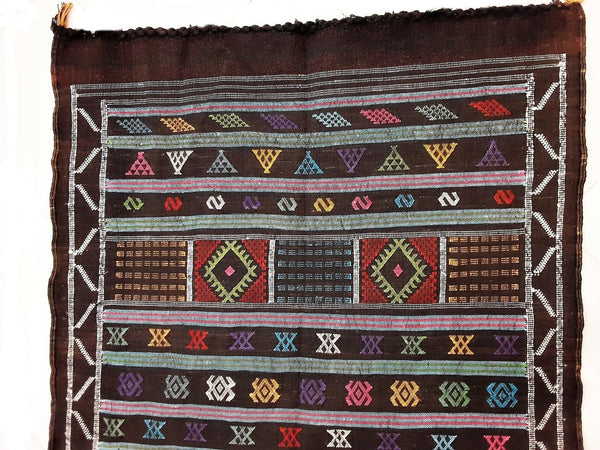
Moroccan Sabra Cactus Silk Rug, one of the best Moroccan heritage. This one of a kind piece of handmade art, purely made by Moroccan Berber Women from the Moroccan Atlas Mountains.
This beautiful white with pale coloured details sabra silk rug measures 97cm x 140cm (38" x 55"). Very rich in embroidery and Berber symbols arranged in a complete harmony. These motifs create an abstract design that make it into a bold piece for any bohemian interior. It can be used as a statment rug or ethnic wall hanging to bring a pop of colour into your living space.
Please note that the more embroideries on the carpet, the higher its value.
Cactus silk is very soft but also strong, and the threads are treated before use to ensure colour-fastness. However, we recommend it be dry-cleaned only.
This designed gift will make any place a different and lovely one. With its aligned color and design, you will redesign any layout and decorate your places that will look new and vital.

- Material: Wool & Polysther
- Color: Brown with coloured details
- Style: Rug
- Size, Appx : 97cm wide x 140cm long
Receiving Time = Processing Time + Shipping Time.
Processing Time (The estimated time it takes to process your order): 21 to 28 days.
Shipping Time (The amount of time required to ship your order out of our warehouse based via Fedex International Priority Method): 2 to 8 days.
- You have 15 days to decide if the items are right for you after you received them.
- You can return any unaltered & undamaged items in original package including your order No.
- Return shipping fee is paid by buyer.
- Please send us the package with your Order Number & your login account in it, we will be very appreciated if you can write down your return reason.
- In order to solve your problem as soon as possible, please contact our Customer Service Staff first and tell us your return reason.
- After we received your returning parcel info and tracking No, we will refund your money to your account within 2-7 working days
- Our products are Returnable but Non-exchangeable.
Because of light problems during photographing process and screen chromatic aberrations, color discrepancies may occur between this product and your computer screen.
The handcrafted touch of artisan skill creates variations in color, size and design. If buying two of the same item, slight differences should be expected.
Inventory Last Updated: Sep 21, 2026
Object Origin
This item is featured in: Sabra / Cactus Silk Blankets, Rugs and Cushions from House of Pillows Gallery
The Desert Fibre
Sabra silk — also called cactus silk or vegetable silk — is extracted from the leaves of the wild Agave cactus growing in the arid regions of Morocco. Entirely plant-based, hand-spun, and handwoven by Berber artisans using techniques passed down through generations. Naturally dyed. Zero-waste by nature. No two pieces identical.
More Than a Store
Moroccan Corridor was not created to sell Moroccan products. It was created to preserve, celebrate, and share the remarkable craftsmanship traditions that have shaped Morocco for centuries.
Every object we present begins long before it reaches a home. It begins with a material, a place, a workshop, and the hands of an artisan whose knowledge has often been passed down through generations.
Our role is simple: To identify exceptional craftsmanship and bring it to those who value authenticity, beauty, and cultural heritage.
We do not manufacture. We do not mass-produce.
We select.
More Readings:
Why Moroccan Corridor? Our Philosophy Our ArtisansFrequently Asked Questions
QUESTIONS & ANSWERS
Have a Question?
Be the first to ask a question about this.