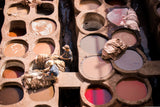
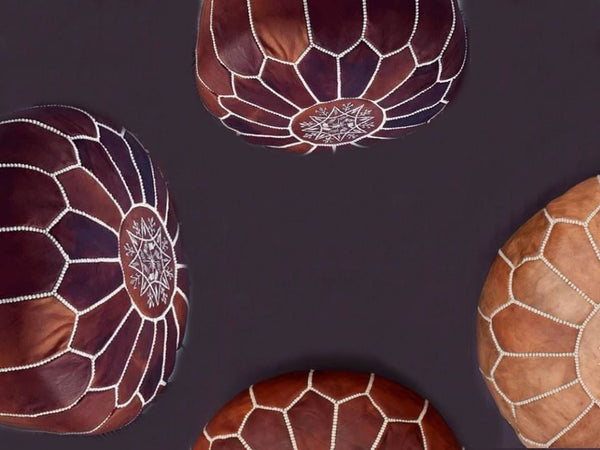
A Moroccan leather pouf is not a disposable object. Made from full-grain goatskin, hand-stitched by artisans in Fès or Marrakesh, and finished with silk embroidery, it is built to last for decades — provided it is properly stuffed, maintained, and stored. This guide covers everything you need to know.
How to Stuff a Moroccan Leather Pouf
Why Poufs Are Sold Unstuffed
Authentic Moroccan poufs are sold unstuffed as standard. This is not a cost-cutting measure — it is a practical necessity. A fully stuffed pouf of medium size weighs between 8 and 15 kilograms and would make international shipping prohibitively expensive. Stuffing your pouf locally also allows you to control the firmness and weight to suit your specific use.
Choosing Your Filling Material
The filling material determines the firmness, weight, and longevity of your pouf. There is no single correct answer — the right choice depends on how you intend to use it.
For a firm pouf — suitable for use as seating or a footrest that needs to support weight without losing its shape — use dense, heavy materials: cotton batting, wool fibres, old denim, folded towels, blankets, or shredded foam. These materials compress over time, so pack firmly and overfill slightly.
For a soft, lightweight pouf — suitable for decorative use or occasional light seating — use polyester ball fibre filling, foam chips, or polystyrene beads. These materials give a relaxed, bean-bag style finish.
For an eco-friendly approach — old clothing, newspapers, fabric scraps, and worn bedding all work well. This is the traditional approach: Moroccan poufs were historically stuffed with whatever textile waste was available in the household. The result is a firm, dense pouf with good longevity.
Whatever material you choose, ensure it is clean and completely dry before use. Damp filling will damage the leather from the inside and cause premature deterioration.
Step-by-Step Stuffing Guide
- Open the zip fully — locate the zip on the underside of the pouf and open it completely to give yourself maximum access.
- Start at the edges — begin by pushing filling into the corners and along the sides. This is the most important step: corners that are not fully packed will cause the pouf to look deflated and lose its shape.
- Build in layers — add filling in layers, pressing down firmly after each addition. Do not simply pour filling into the centre — work it evenly throughout.
- Overfill slightly — the filling will compact with use over the first few weeks. Fill the pouf until it is slightly overfull before closing. This ensures it retains its shape after the initial settling period.
- Close the zip carefully — do not force the zip if there is resistance. Remove a small amount of filling, redistribute, and try again. Forcing an overfilled zip will damage both the zip and the leather around it.
Stuffing Tips
Pay particular attention to the top surface — it should be taut and even, with no visible dips or lumps. If the top looks uneven after closing, reopen the zip and redistribute the filling until the surface is smooth. A well-stuffed pouf should feel firm and hold its shape when you press down on it with your hand.
If the filling compacts significantly after the first few weeks of use, simply reopen the zip and add more material. The zip is designed to be opened and closed repeatedly.
How to Care for a Moroccan Leather Pouf
Daily Care
Full-grain goatskin is naturally resilient and requires minimal daily maintenance. For routine cleaning, wipe the surface with a clean, dry cloth. For light soiling, a slightly damp cloth followed immediately by a dry cloth is sufficient. Never use soap, detergent, or cleaning sprays directly on the leather — these will strip the natural oils and cause the surface to dry and crack over time.
Conditioning
Every six to twelve months, apply a small amount of leather conditioner to the entire surface of the pouf. Use a conditioner specifically formulated for natural leather — available from leather goods stores or cobblers. Apply with a soft cloth in circular motions, allow to absorb for fifteen minutes, then buff gently with a clean cloth. This restores the natural oils in the leather and maintains its suppleness and colour depth.
Spills and Stains
Act immediately. Blot — do not rub — any liquid spill with a clean, dry cloth. Rubbing will spread the stain and push it deeper into the leather grain. For stubborn stains, a leather-specific cleaning product applied sparingly with a soft cloth is the safest approach. Test any product on a small, inconspicuous area first.
What to Avoid
Never submerge or saturate the leather with water — this will cause the leather to stiffen, warp, and crack as it dries. Avoid prolonged exposure to direct sunlight, which will fade the dyes and dry out the leather over time. Keep the pouf away from direct heat sources such as radiators and fireplaces.
Storage
If storing the pouf for an extended period, keep it in a cool, dry, well-ventilated space. Avoid plastic bags or airtight containers — leather needs to breathe. Do not store in damp conditions, which will cause mould, or in excessively dry conditions, which will cause the leather to crack. A breathable cotton dust bag or pillowcase is ideal for long-term storage.
Natural Colour Evolution
Undyed or lightly dyed leather poufs will develop a patina over time — deepening in colour and developing a subtle sheen with use and exposure to light. This is not a defect; it is the natural behaviour of full-grain vegetable-tanned leather and one of its most valued characteristics. A pouf that has been used and cared for over several years will look richer and more beautiful than a new one.
If you wish to accelerate the darkening of an undyed pouf, controlled exposure to indirect natural light over several weeks will deepen the colour gradually. Avoid direct, intense sunlight, which will cause uneven fading rather than an even patina.
Moroccan Leather Poufs in the Home
The pouf is one of the most versatile objects in Moroccan domestic culture — used as seating, footrest, side table, and decorative accent depending on context. In contemporary interiors, it works equally well in minimal, maximalist, and transitional spaces.
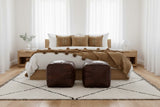
As a footrest paired with a sofa or armchair, a firmly stuffed pouf provides comfortable support at the right height. As occasional seating, two or three poufs grouped together create flexible, low-profile seating that can be rearranged easily. As a side table, a flat-topped pouf with a tray on top is a practical and visually distinctive alternative to a conventional table. At the foot of a bed, a single large pouf adds both function and visual weight to the room.
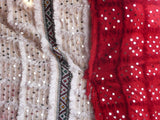
The embroidered surface of a Moroccan pouf also functions as a decorative object in its own right — the geometric and floral patterns visible from above make it a considered addition to any floor composition. Explore our pouf and ottoman gallery →
Frequently Asked Questions
How much filling do I need for a standard Moroccan pouf?
A standard medium pouf (approximately 50cm diameter, 30cm height) requires between 3 and 5 kilograms of dense filling such as cotton or old clothing, or a larger volume of lighter materials such as polyester fibre or foam chips. The exact quantity depends on the filling material and how firmly you pack it. Always overfill slightly to account for compaction.
Can I use a Moroccan pouf as a seat?
Yes — provided it is firmly stuffed with a dense material such as cotton batting, old denim, or wool fibres. A pouf stuffed with lightweight materials such as polystyrene beads will not provide adequate support for seated use and will lose its shape quickly under body weight. If seating is your primary use, pack the pouf as firmly as possible.
How do I clean a Moroccan leather pouf?
For routine cleaning, wipe with a clean dry cloth. For light soiling, use a slightly damp cloth followed immediately by a dry cloth. For stains, use a leather-specific cleaning product applied sparingly. Never use water, soap, or household cleaning sprays directly on the leather. Condition the leather every six to twelve months with a natural leather conditioner.
Will the colour of my pouf change over time?
Yes — this is normal and desirable. Full-grain vegetable-tanned leather develops a patina with use and light exposure, deepening in colour and developing a subtle sheen. Undyed leather will darken noticeably over the first year of use. Dyed leather will mellow and deepen. This patina is one of the defining characteristics of high-quality natural leather.
My pouf has lost its shape — what should I do?
Open the zip on the underside and add more filling, paying particular attention to the corners and edges. Press the filling firmly into all areas before closing. If the pouf has been in use for some time, the existing filling may have compacted significantly — in this case, remove some of the old filling, replace it with fresh material, and repack firmly.
Can I wash the leather cover of my pouf?
No. Never machine-wash or submerge the leather cover in water. Water will cause the leather to stiffen, warp, and crack as it dries, and will permanently damage the embroidery. Spot-clean only, using a dry or very slightly damp cloth, and condition regularly to maintain the leather's suppleness.
Where can I buy an authentic Moroccan leather pouf?
Moroccan Corridor sources leather poufs directly from artisan workshops in Fès and Marrakesh. Each pouf is made from full-grain goatskin, hand-stitched, and finished with silk embroidery. Explore our pouf collection →