
There is something quietly extraordinary about a Moroccan blanket. It arrives folded, carrying the memory of a loom, a pair of hands, and a tradition that stretches back centuries across the Atlas Mountains, the medinas of Fez, and the blue-washed streets of Chefchaouen. This guide explores the major styles, materials, and stories behind Moroccan blankets — and how to bring them into your home with intention.
The Living Tradition of Moroccan Weaving
Moroccan textile weaving is not a craft preserved in museums. It is alive in the workshops of Marrakech, in the Berber villages of the High Atlas, and in the cooperative ateliers of the Rif Mountains. Each region has developed its own vocabulary of pattern, fiber, and technique — shaped by climate, culture, and the materials available at hand.
Understanding these regional traditions is the first step to appreciating what makes a Moroccan blanket genuinely special — and what separates an authentic handmade piece from a mass-produced imitation.
The Major Styles of Moroccan Blankets
Handira — The Wedding Blanket
The Handira is perhaps the most iconic of all Moroccan blankets. Traditionally woven by Berber women of the Middle Atlas as a wedding gift, the Handira is characterized by its ivory or undyed wool base, adorned with metallic sequins that catch the light with every movement. The sequins are not merely decorative — they are believed to ward off the evil eye and bring good fortune to the bride.
Authentic Handira blankets are woven on horizontal ground looms and can take weeks to complete. Each one is unique, bearing the weaver's personal touch in the placement of sequins and the density of the weave. Today, Handira blankets are prized as wall hangings, bed throws, and statement pieces in bohemian and modern luxury interiors alike.
Beni Ourain-Inspired Blankets
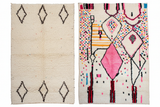
The Beni Ourain tribes of the northeastern Middle Atlas are best known for their thick, plush rugs — but their weaving tradition extends to blankets and throws as well. Beni Ourain-inspired blankets typically feature undyed natural wool in cream and ivory tones, with simple geometric patterns in dark brown or black. The aesthetic is minimalist, warm, and timeless — equally at home in a Scandinavian interior as in a Moroccan riad.
Pompom Blankets
Cheerful, colorful, and unmistakably Moroccan, pompom blankets are woven from soft wool or cotton and finished with rows of hand-tied pompoms along the edges. They are a staple of the Marrakech souks and a favorite among travelers seeking a lightweight, versatile textile. Pompom blankets work beautifully as bed throws, picnic blankets, or draped over a sofa for a relaxed, bohemian touch.
Sabra Silk Blankets & Throws
Sabra — also known as cactus silk — is extracted from the leaves of the agave plant and spun by hand into a lustrous, lightweight fiber. Sabra blankets and throws have a distinctive sheen that resembles silk, but with a slightly textured, organic quality that speaks to their natural origin. They are cooler and lighter than wool, making them ideal for warmer climates or as decorative layering pieces. The colors of Sabra textiles are typically vivid — deep jewel tones, earthy terracottas, and rich indigos — achieved through natural or low-impact dyeing processes.
The Chefchaouen Blanket — A Style Apart
Nestled in the Rif Mountains of northern Morocco, the blue city of Chefchaouen has its own distinctive textile tradition. Chefchaouen blankets are lighter and more loosely woven than their Atlas counterparts — a reflection of the milder mountain climate and the Andalusian influences that shaped the city's culture after the arrival of Moorish and Jewish refugees from Spain in the 15th century.
These blankets are typically woven from fine wool or cotton in bold horizontal stripes — vivid blues, whites, greens, and reds — that echo the painted walls of the medina. They are versatile, packable, and lightweight enough to serve as a travel companion, a beach throw, or a summer bed layer. At Moroccan Corridor, the Chefchaouen blanket represents a quieter, more intimate side of Moroccan textile culture — one rooted in the daily life of a mountain community rather than the grand ceremonial traditions of the south.
Materials: What Moroccan Blankets Are Made Of
The fiber of a Moroccan blanket tells you as much about its origin as its pattern. The most common materials include:
- Wool — the dominant fiber of the Atlas and Berber traditions. Warm, durable, and naturally water-resistant. Can range from coarse and rustic to fine and soft depending on the sheep breed and processing method.
- Cotton — lighter and more breathable than wool. Common in coastal and northern regions, and often used in pompom blankets and summer throws.
- Sabra (Cactus Silk) — extracted from agave leaves. Lustrous, lightweight, and vegan. Increasingly popular in contemporary Moroccan design.
- Mixed fibers — many artisan blankets combine wool with cotton or Sabra for texture, weight, and visual interest.
- Metallic sequins — used in Handira blankets, traditionally made from hammered aluminum or silver-toned metal.
Authenticity: How to Tell a Handmade Moroccan Blanket from a Mass-Produced One
The global popularity of Moroccan textiles has inevitably led to the proliferation of machine-made imitations. Here is what to look for when assessing authenticity:
- Irregularity — handwoven blankets have slight variations in tension, pattern, and fringe. Perfect uniformity is a sign of machine production.
- Weight and hand-feel — authentic wool blankets have a natural lanolin quality and a weight that machine-made acrylic pieces cannot replicate.
- Fringe — on a handwoven piece, the fringe is an extension of the warp threads, not sewn on separately.
- Provenance — ask where and by whom the blanket was made. Reputable sellers can trace their pieces to specific cooperatives, regions, or artisans.
- Price — a genuine handwoven Moroccan blanket represents many hours of skilled labor. If the price seems too low, it almost certainly is.
How to Style Moroccan Blankets at Home
Moroccan blankets are among the most versatile textiles in interior design. Here are the most effective ways to use them:
- Layered on a bed — fold a Handira or Beni Ourain-inspired throw at the foot of the bed for texture and warmth without visual weight.
- Draped over a sofa — a pompom blanket or Chefchaouen stripe throw adds color and softness to a neutral sofa.
- As a wall hanging — Handira blankets with their sequined surface make exceptional wall art, especially in rooms with natural light.
- Picnic or outdoor throw — lightweight Sabra or cotton blankets are ideal for outdoor use.
- Layered with cushions — pair with Sabra silk cushions for a cohesive Moroccan-inspired interior.
Which Interior Styles Pair Best with Moroccan Blankets
Moroccan blankets are more versatile than their exotic reputation suggests. They work particularly well in bohemian interiors, where their texture and pattern feel at home among plants, rattan, and layered rugs. But they are equally effective in minimalist spaces, where a single Handira or Beni Ourain throw provides warmth and visual interest without clutter. Modern luxury interiors benefit from the tactile richness of a Sabra throw, while rustic and Scandinavian spaces are elevated by the natural wool tones of an Atlas blanket.
Buying Your First Moroccan Blanket: A Short Guide
For Warmth and Daily Use
Choose a wool blanket — Beni Ourain-inspired or a classic Atlas weave. These are the most durable and warm options, suited to year-round use.
For Decoration and Visual Impact
A Handira is unmatched — its sequined surface works as a throw or wall hanging and brings immediate visual richness to any room.
For Versatility and Travel
A Chefchaouen stripe or pompom blanket is the most practical choice — lightweight, packable, and versatile enough for indoor and outdoor use.
For a Contemporary, Design-Forward Piece
Explore Sabra silk throws — lustrous, lightweight, and vegan, with vivid natural colors that work in modern and minimalist interiors.
Above all, buy from sellers who can tell you the story of the piece — where it was made, by whom, and from what materials. That story is part of what you are bringing into your home.
Frequently Asked Questions
What is a Moroccan blanket made of?
Moroccan blankets are made from wool, cotton, Sabra (cactus silk), or mixed fibers depending on the style and region. Handira blankets feature metallic sequins on a wool base; pompom blankets are typically wool or cotton; Sabra throws are made from agave fiber.
What is a Handira blanket?
A Handira is a traditional Berber wedding blanket, woven by women of the Middle Atlas from undyed wool and adorned with metallic sequins. Each piece is unique and can take weeks to complete. Today they are used as throws, bed covers, and wall hangings.
What is the difference between a Moroccan blanket and a regular throw?
An authentic Moroccan blanket is handwoven by artisans using traditional techniques and natural fibers. It has slight irregularities in pattern and tension that are marks of authenticity. A regular throw is typically machine-made from synthetic fibers with a uniform finish.
Are Moroccan blankets warm?
Wool Moroccan blankets — including Beni Ourain-inspired and Atlas weaves — are warm and naturally water-resistant. Sabra and cotton blankets are lighter and better suited to warmer climates or decorative use.
How do I care for a Moroccan wool blanket?
Hand wash in cold water with a gentle detergent, or dry clean. Avoid machine washing, which can cause shrinkage and damage the weave. Lay flat to dry away from direct sunlight.
What is Sabra silk?
Sabra — also called cactus silk — is a fiber extracted from the leaves of the agave plant and spun by hand. It has a lustrous, silk-like sheen with a slightly textured quality. It is lightweight, vegan, and naturally dyed in vivid colors.
Where are Chefchaouen blankets made?
Chefchaouen blankets are made in the Rif Mountains of northern Morocco, in and around the blue city of Chefchaouen. They are lighter and more loosely woven than Atlas blankets, typically featuring bold horizontal stripes in blues, whites, and greens.
Explore our Blankets & Throws collection → Discover the Art of Making at Moroccan Corridor →