The right work bag is not the most expensive one, or the most recognizable brand. It is the one that fits how you actually work — what you carry, how far you travel, and what the bag needs to say when you walk into a room.
This guide covers the main categories of men's work bags, what each one is suited for, and where Moroccan Corridor's leather pieces fit within that framework.
Briefcase
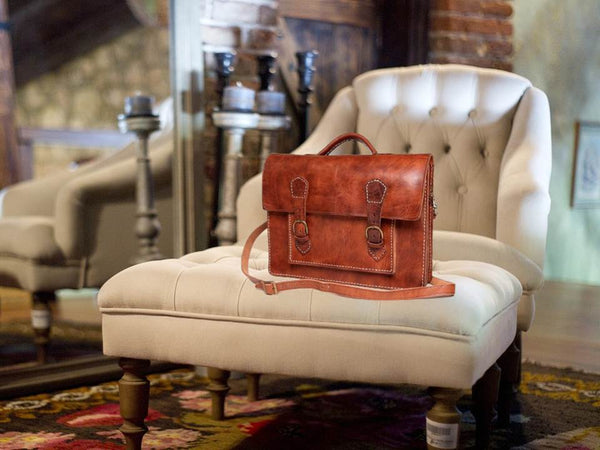
The briefcase is the most formal option. Carried by hand or over the forearm, it signals structure and intention. It works best for office environments where you move between meetings rather than commuting long distances on foot — the hand-carry format becomes uncomfortable over distance.
Choose a briefcase if you carry documents, a laptop, and a moderate amount of daily kit, and if your professional context calls for a formal silhouette. Leather is the only material that holds its shape and ages appropriately in this format.

Casablanca Leather Bag — Brown
Messenger Bag
The messenger bag sits between the briefcase and the backpack. Worn across the body, it keeps your hands free while maintaining a more structured silhouette than a backpack. It is the most versatile format for men who move between office, client visits, and commuting on foot or by transit.
The crossbody carry distributes weight more evenly than a briefcase and keeps the bag accessible without removing it. For a laptop and daily essentials, it is often the most practical choice.
Tote
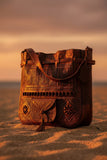
The leather tote is the least formal of the three but the most capacious. It works well for creative industries, travel days, or when you need to carry more than a standard briefcase allows. The open-top format makes access fast; the shoulder carry is comfortable over distance.
In leather, a tote reads as considered rather than casual — particularly in a structured shape with clean stitching and minimal hardware.
The Heritage Portfolio
For those who carry less — a notebook, a tablet, documents, a phone — the portfolio is the most refined option. It eliminates bulk entirely and works as both a bag and a desk surface. The Heritage Portfolio from Moroccan Corridor is hand-tooled in full-grain leather by artisans in Fès and Tétouan, available in a range of colors from classic Black and Brown to Turquoise and Orange.
It is the bag for the meeting, not the commute — and for many professionals, that is the only bag that matters.
How to Choose
By commute: if you walk or use public transit over distance, a messenger or backpack is more comfortable than a briefcase. If you drive or travel short distances, a briefcase or portfolio works well.
By what you carry: laptop plus documents plus daily kit — messenger or tote. Documents and a tablet only — portfolio or briefcase. Everything including gym kit — tote.
By context: formal client-facing roles — briefcase or portfolio. Creative or hybrid environments — messenger or tote. Field or site work — messenger with crossbody carry.
By material: for any professional context, full-grain leather is the only material that improves with use. It develops a patina, holds its structure, and does not degrade the way synthetic or bonded leather does. A well-maintained leather bag will outlast several synthetic replacements.
Frequently Asked Questions
What is the best leather work bag for men?
The best work bag depends on your commute and what you carry. For formal environments with short commutes, a briefcase or portfolio. For longer commutes or mixed-use days, a messenger bag. For maximum capacity, a leather tote. In all cases, full-grain vegetable-tanned leather is the most durable and age-worthy material.
What is the difference between a briefcase and a messenger bag?
A briefcase is carried by hand or over the forearm and has a structured, formal silhouette. A messenger bag is worn across the body, keeping hands free, and is more practical for commuting on foot or by transit. The messenger is more versatile; the briefcase is more formal.
What leather does Moroccan Corridor use for work bags?
Moroccan Corridor uses full-grain vegetable-tanned leather sourced from traditional tanneries in Fès and Marrakesh. The leather is tanned using natural plant-based tannins rather than industrial chromium salts, producing a material that is firmer, more breathable, and develops a rich patina over time.
What is the Heritage Portfolio?
The Heritage Portfolio is a hand-tooled leather portfolio made by artisans in Fès and Tétouan. It is designed for professionals who carry documents, a tablet, and daily essentials without needing a full bag. Available in multiple colors including Black, Brown, Turquoise, and Orange.
How long does a leather work bag last?
A full-grain leather bag, properly maintained, will last 10–20 years and improve in appearance over time. Bonded or synthetic leather typically degrades within 2–5 years. The key maintenance steps are keeping the leather conditioned every few months and avoiding prolonged exposure to water or direct sunlight.
Is a leather tote appropriate for professional use?
Yes — in leather, a structured tote reads as considered and intentional rather than casual. It works particularly well in creative industries, hybrid work environments, and travel days where capacity matters more than formality.